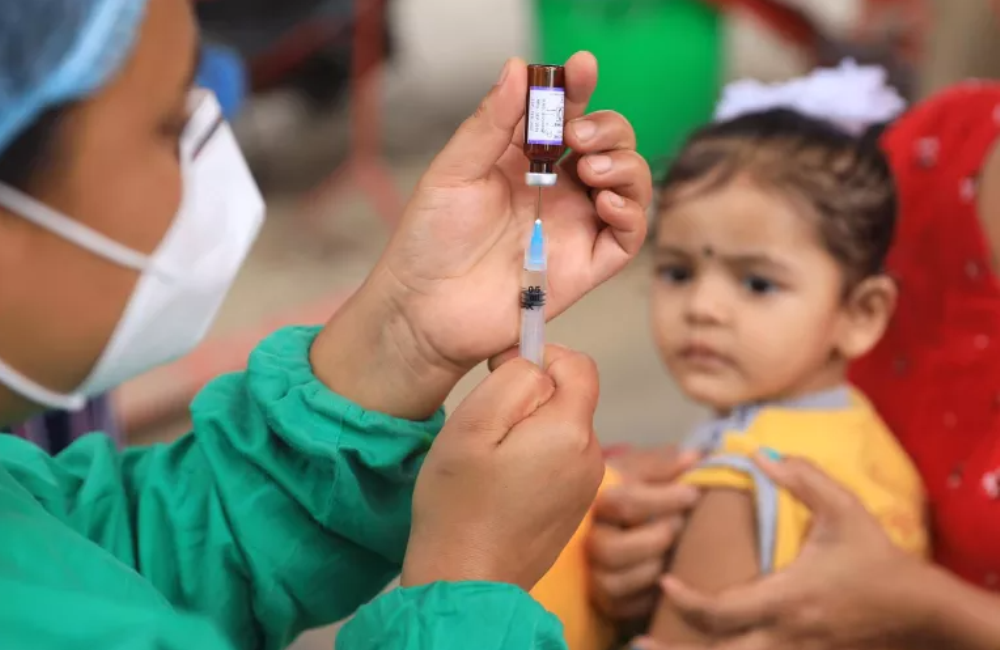
South Asia has reached its highest-ever immunization coverage for children, according to new data released by WHO and UNICEF for 2024, marking a historic milestone in the region’s efforts to protect children from vaccine-preventable diseases. The rise in coverage reflects a strong collective effort led by governments, supported by health workers, donors and communities.
In 2024, 92 per cent of infants in the region received their third dose of the Diphtheria, Tetanus and Pertussis (DTP) vaccine, a globally recognized measure of immunization progress. This represents a 2 percentage point increase over 2023 and surpasses pre-COVID-19 levels. Similarly, first-dose DTP coverage increased from 93 per cent to 95 per cent, signaling a significant rebound after pandemic disruptions. The number of children who did not receive even a single vaccine dose—known as zero-dose children—fell by 27 per cent, from 2.5 million to 1.8 million in just one year.
Progress has been especially strong in India and Nepal. India reduced its number of zero-dose children by 43 per cent, from 1.6 million in 2023 to 0.9 million in 2024. Nepal saw a 52 per cent reduction, from 23,000 to 11,000. Pakistan also reported its highest-ever DTP3 coverage at 87 per cent. Despite this regional progress, challenges persist in Afghanistan, which reported the lowest vaccination rates and a slight decline in DTP coverage over the past year.
The region also recorded notable success in measles immunization. In 2024, 93 per cent of infants received the first dose of the measles vaccine and 88 per cent received the second dose—up from 90 per cent and 87 per cent, respectively, in 2023. This led to a 39 per cent drop in measles cases, falling from over 90,000 to about 55,000. However, coverage still falls short of the 95 per cent threshold needed to prevent future outbreaks.
Vaccination efforts among adolescent girls against human papillomavirus (HPV), a leading cause of cervical cancer, have also expanded. Regional coverage rose from 2 per cent in 2023 to 9 per cent in 2024. Bangladesh vaccinated over 7.1 million girls since launching its HPV programme last year, while Bhutan, Maldives and Sri Lanka all reported increases in HPV vaccination rates. Nepal, which launched its national campaign in early 2025, has already vaccinated over 1.4 million girls. India and Pakistan are preparing to begin their HPV immunization programmes later this year.
The success achieved in 2024 reflects sustained investment, leadership and innovation across the region. Governments have prioritized immunization through policies and funding, while frontline and community health workers—most of whom are women—played a critical role in reaching underserved populations. Digital tools and improved data systems have helped identify children missing vaccinations and targeted campaigns have ensured timely access to vaccines for children, adolescents and mothers.
“This is a proud moment for South Asia. More children are protected today than ever before,” said Sanjay Wijesekera, UNICEF Regional Director for South Asia. “But we cannot forget the millions of children who are under-vaccinated or unvaccinated. Now is the time to push further.”
Despite the gains, more than 2.9 million children in South Asia remain un- or under-vaccinated. UNICEF and WHO are calling on governments to sustain political commitment, increase domestic financing and expand HPV vaccination. They also urge renewed efforts to reach zero-dose children, invest in health workers and bridge gaps in measles coverage.
“It is heartening to see WHO South-East Asia Region reach the highest-ever immunization rates,” said Dr Thaksaphon Thamarangsi, WHO Director of Programme Management. “We must build on this momentum and step up efforts to reach every child with these lifesaving vaccines. Together we can and we must.”
The data reflect what is possible when leadership, collaboration and trust come together in support of child health. The challenge now is to ensure this momentum continues so that every child, no matter where they live, has access to life-saving immunizations.



 South Asia Politics