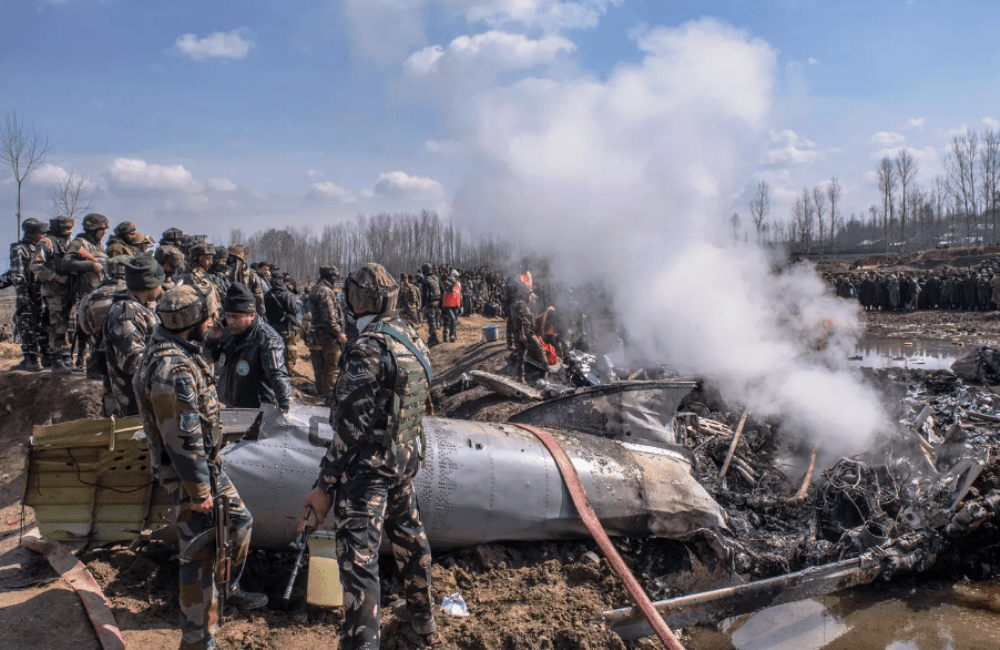
In May 2025, India and Pakistan, two nuclear-armed neighbors with a history of conflict, found themselves on the brink of full-scale war.
The catalyst was a deadly incident where gunmen killed 26 people, predominantly Hindu tourists, in Indian-administered-Kashmir on April 22. India accused Pakistan of supporting the gunmen responsible, a claim Islamabad denied. The ensuing military escalation marked the most severe confrontation between the two nations in nearly three decades.
The Escalation
The conflict began on April 23, 2025, when India downgraded diplomatic ties, closed the only functional land border crossing and suspended the Indus Waters Treaty, a 1960 agreement that had survived two wars and numerous skirmishes. India accused Pakistan of backing the alleged terrorist attack, while Pakistan denied involvement. In retaliation, Pakistan shut its airspace to Indian airlines and suspended all trade with India, including to and from any third country.
By April 30, authorities in Indian-administered-Kashmir had temporarily closed dozens of resorts, and troops from both countries exchanged fire over the Line of Control (LoC) for a fifth consecutive night. Pakistan claimed to have “credible intelligence” that India intended to carry out military action against Pakistan in the next 24 to 36 hours.
On May 7, India launched missile strikes on Pakistan, targeting at least nine sites “where terrorist attacks against India have been planned,” according to India’s Defense Ministry. The strikes killed 31 people, including women and children, in Pakistan-administered-Kashmir and the country’s Punjab province. Pakistan claimed to have downed five Indian fighter jets in response.
The situation escalated further when India fired missiles on May 10, targeting Pakistani air bases in Rawalpindi, Chakwal and Jhang. Pakistan retaliated with missile strikes on Indian military positions. Residents in Indian-administered-Kashmir reported hearing loud explosions in multiple places, including Srinagar, Jammu and Udhampur.
The Ceasefire
On May 10, 2025, a ceasefire agreement was reached, ending the most intense conflict between India and Pakistan in nearly 30 years. The deal was facilitated by U.S.-led talks, with significant roles played by Saudi Arabia and Turkey. Pakistani Foreign Minister Ishaq Dar announced the truce, stating that both sides had agreed to stop all firing and military action on land, in the air and at sea.
The ceasefire was welcomed internationally, with China expressing strong support for efforts by Pakistan and India to resolve their differences through dialogue and achieve a lasting ceasefire. Chinese Foreign Minister Wang Yi made these remarks during a meeting with Pakistani Foreign Minister Ishaq Dar in Beijing. The U.S. President Donald Trump congratulated both countries on reaching the agreement.
The Role of Drone Warfare
One of the most alarming aspects of the 2025 conflict was the extensive use of drone warfare. Both India and Pakistan deployed drones for surveillance and targeted strikes, marking a new phase in their military confrontations. Indian defense officials reported that Pakistan’s military had attempted aerial intrusions in 36 locations with “300 to 400” drones to test India’s air-defense system. In response, Pakistani military officials claimed to have shot down numerous Indian drones, including in Karachi and Rawalpindi. This marked the first time unmanned aerial vehicles were used by the two nuclear-armed countries against each other.
International Reactions
The international community expressed deep concern over the escalating tensions between India and Pakistan. The United Nations Secretary-General Antonio Guterres called for maximum restraint, emphasizing that the world could not “afford a military confrontation” between the two nations. China, a significant player in the region, called India’s military action “regrettable” and urged both countries to exercise restraint. President Donald Trump condemned the escalation, expressing hope that the fighting would end quickly.
United Arab Emirates and Turkey also urged both nations to exercise restraint and seek a peaceful resolution. Earlier in May, Turkey’s President Recep Tayyip Erdoğan had expressed solidarity with Pakistan following India’s military strikes, leading to a backlash in India, with some grocery stores and major online retailers boycotting Turkish products.
Unfinished Business
The 2025 India-Pakistan conflict highlighted the fragile nature of peace between two nuclear-armed neighbors with a history of hostility. While the ceasefire has brought temporary relief, underlying issues such as the Kashmir dispute, accusations of cross-border militancy and water-sharing agreements remain unresolved.
The extensive use of drone warfare has introduced new complexities to the conflict, raising concerns about the future of warfare in the region. The international community’s role in mediating and facilitating dialogue will be crucial in preventing future escalations and ensuring long-term peace in South Asia.



 South Asia Politics