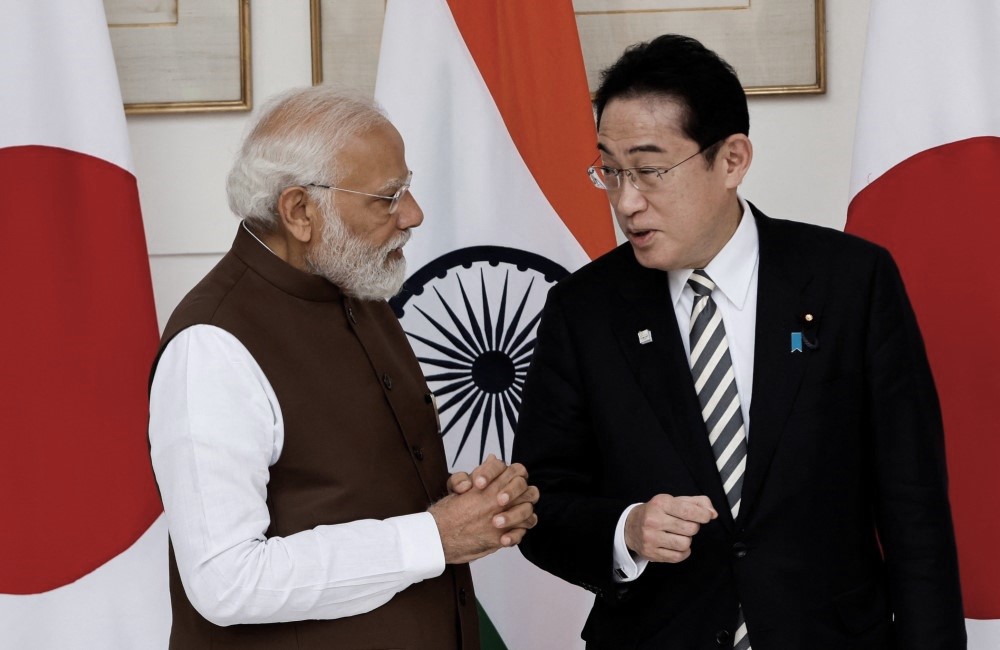
In April 2024, Bangladesh, Japan and India convened in Agartala, India, to discuss regional connectivity initiatives, aiming to unlock the commercial potential of the region.
The meeting, organized by Asian Confluence and the Indian Ministry of External Affairs, emphasized enhancing multi-modal connectivity between Northeast India and Bangladesh, particularly through the creation of express corridors for goods to transit via Bangladesh’s Chattogram Port. This would allow the establishment of industrial value chains, benefiting India and Japan, and encouraging Japanese investment in the region.
Japan’s interest in the region is also linked to its broader Indo-Pacific strategy, articulated in its “Free and Open Indo-Pacific” (FOIP) vision. This includes significant investments in both Bangladesh and Northeast India, aimed at fostering integrated economic development.
Key projects, like the Matarbari Port in Bangladesh, are part of Japan’s larger infrastructure development initiatives, which are designed to promote multi-layer connectivity across the Bay of Bengal.
Additionally, Japan has been involved in Bangladesh’s Mass Rapid Transport system and is focused on addressing regional vulnerabilities, such as climate change and digital infrastructure needs, by providing development assistance and fostering cooperation with India.
However, Japan’s position in the region has been challenged by China’s Belt and Road Initiative (BRI), in which Bangladesh is a participant. While Japan focuses on transparent, high-quality infrastructure development, it must compete with China’s more aggressive investment model, which has often led to unsustainable debt burdens, as seen in Sri Lanka.
Japan aims to offer an alternative to China’s opaque financing by focusing on fair and inclusive development through investments in reliable technologies, like digital infrastructure and undersea cables, along with sustainable projects like smart cities.
Japan’s strategic partnership with India is integral to its broader vision for South Asia and the Indo-Pacific. Prime Minister Fumio Kishida has emphasized that Japan and India, as key democratic powers, must collaborate to ensure stability in the region. This partnership, framed within Japan’s FOIP policy, also aims to balance China’s growing influence in the region.
Both countries are exploring ways to foster deeper economic ties, particularly in the development of a Bay of Bengal-Northeast India industrial value chain, which will require substantial infrastructure improvements, including improved transport and connectivity.
The prospect of linking Japan’s investments in Bangladesh and Northeast India is still uncertain, mainly due to the existing infrastructural challenges.
However, if this partnership becomes successful in its mission, this could create a powerful economic zone with potential benefits for both Japan and India.




 South Asia Politics