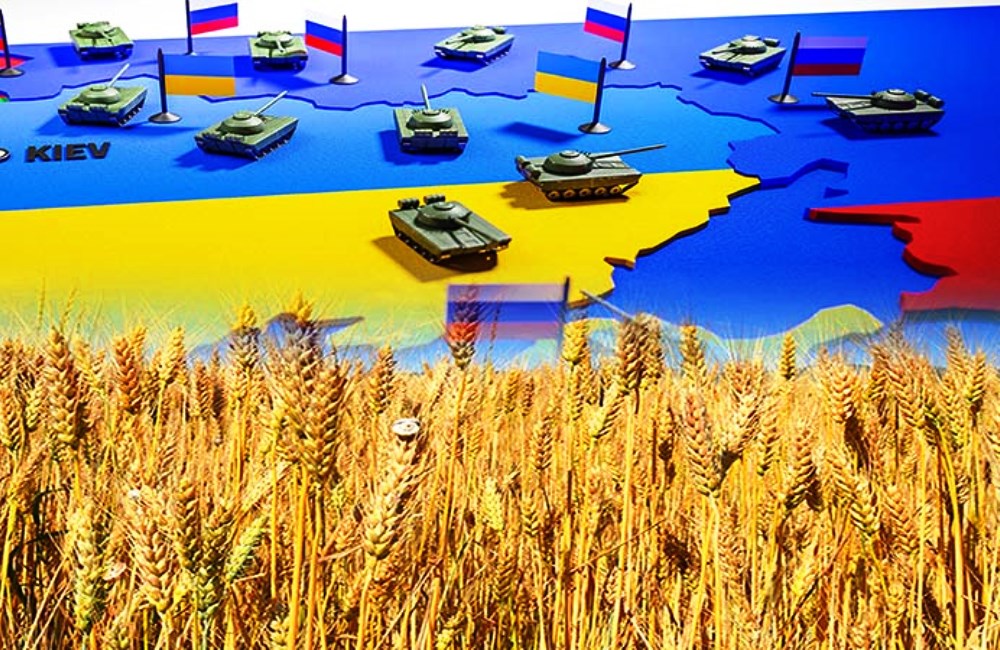
The ongoing war in Ukraine has far-reaching political, legal, and economic consequences that ripple beyond its borders, affecting both Europe and the Global South.
Russia justifies its invasion by citing national security interests and the protection of ethnic Russians in eastern Ukraine, yet its actions violate core principles of international law, including sovereignty and humanitarian protections.
The war has destabilized Europe, threatening security, energy, and food supplies. In response, the European Union has unified to impose economic sanctions on Russia, severely impacting its economy and reducing its global influence. This could potentially benefit NATO’s long-term dominance in Europe, though the growing U.S. influence in the region raises concerns about sidelining the EU in future security decisions.
Meanwhile, the war’s consequences extend far beyond Europe, with significant economic repercussions for the Global South. Rising fuel prices and inflation have destabilized countries in South Asia, including India, Pakistan, Bangladesh, Nepal, Bhutan, and the Maldives.
While India has managed to shield its economy by securing cheaper Russian oil, the region as a whole struggles with higher food prices, inflation, and currency devaluation.
The Ukraine conflict underscores the interconnectedness of global security and economics, compelling nations to reassess their energy and food dependencies. Moving forward, greater cooperation between South Asia and Europe could help mitigate the war’s broader effects, particularly through enhanced trade and technological collaboration.
The war in Ukraine highlights the need for a unified global approach to international law and economic stability.


 South Asia Politics